GM3: A General Physical Model for Micro-Mobility Vehicles

1University of Maryland, College Park
*Equal contribution

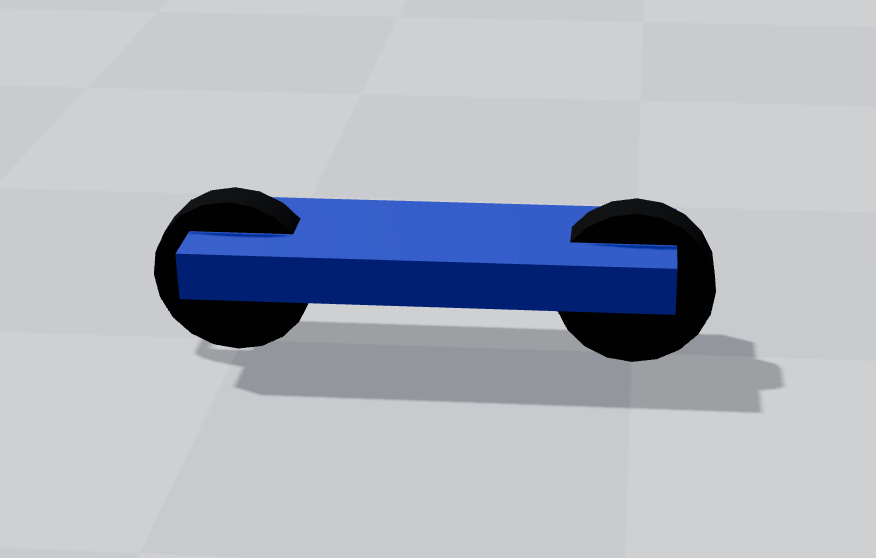
Bicycle/Scooter

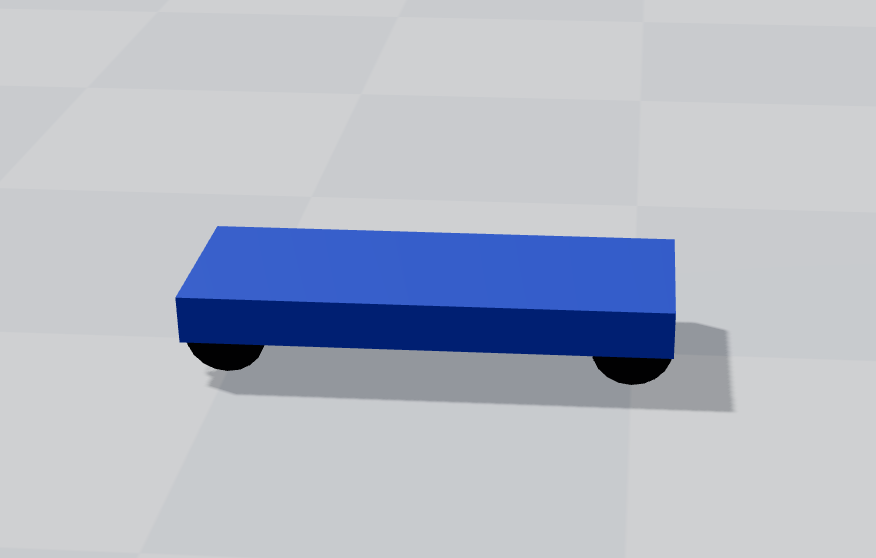
Skateboard

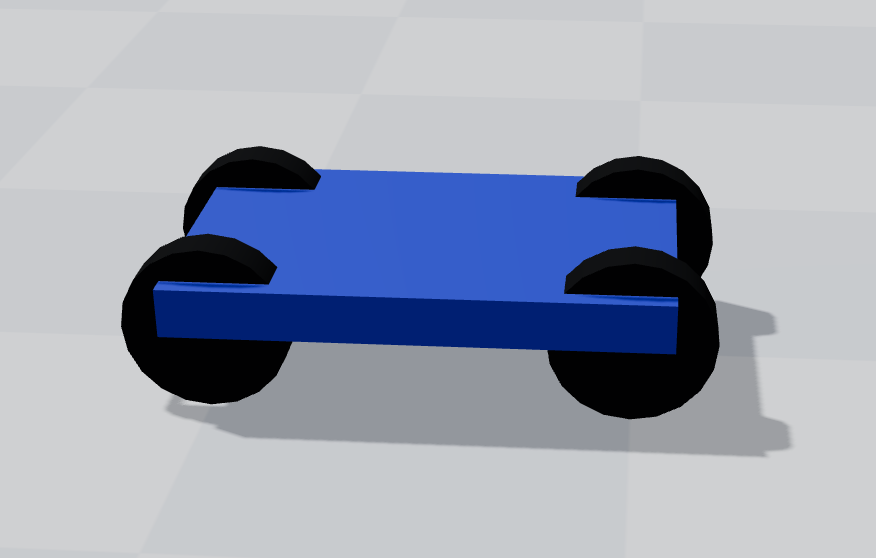
Cart

Abstract

Modeling the dynamics of micro-mobility vehicles (MMV) is becoming increasingly important for training autonomous vehicle systems and building urban traffic simulations. However, mainstream tools rely on variants of the Kinematic Bicycle Model (KBM) or mode-specific physics that miss tire slip, load transfer, and rider/vehicle lean. To our knowledge, no unified, physics-based model captures these dynamics across the full range of common MMVs and wheel layouts. We propose the "Generalized Micro-mobility Model" (GM3), a tire-level formulation based on the tire brush representation that supports arbitrary wheel configurations, including single/double track and multi-wheel platforms. We introduce an interactive model-agnostic evaluation and visualization framework that decouples vehicle/layout specification from dynamics to compare the GM3 with the KBM and other models, consisting of fixed step RK4 integration, human-in-the-loop and scripted control, real-time trajectory traces, and logging for analysis. We also empirically validate the GM3 on the Stanford Drone Dataset's deathCircle (roundabout) scene for biker, skater, and cart classes.

Demo Video

Methodology

Vehicle Integration

We apply the tire brush model to an MMV with any number of tires, given their positions relative to the center of gravity:

  1. Transform velocity from body frame into tire frame
  2. Compute tire brush model forces and moments
  3. Transform forces and moments back into body frame
  4. Add up forces and moments to calculate acceleration
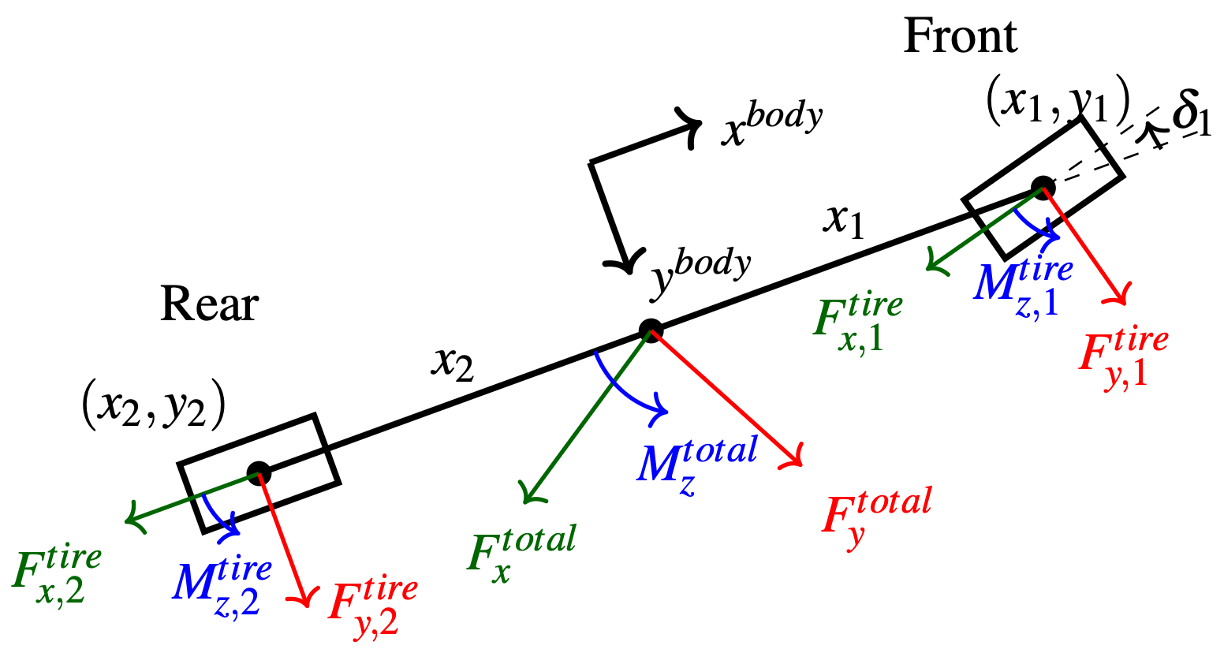
Vehicle integration visualization

Load Transfer

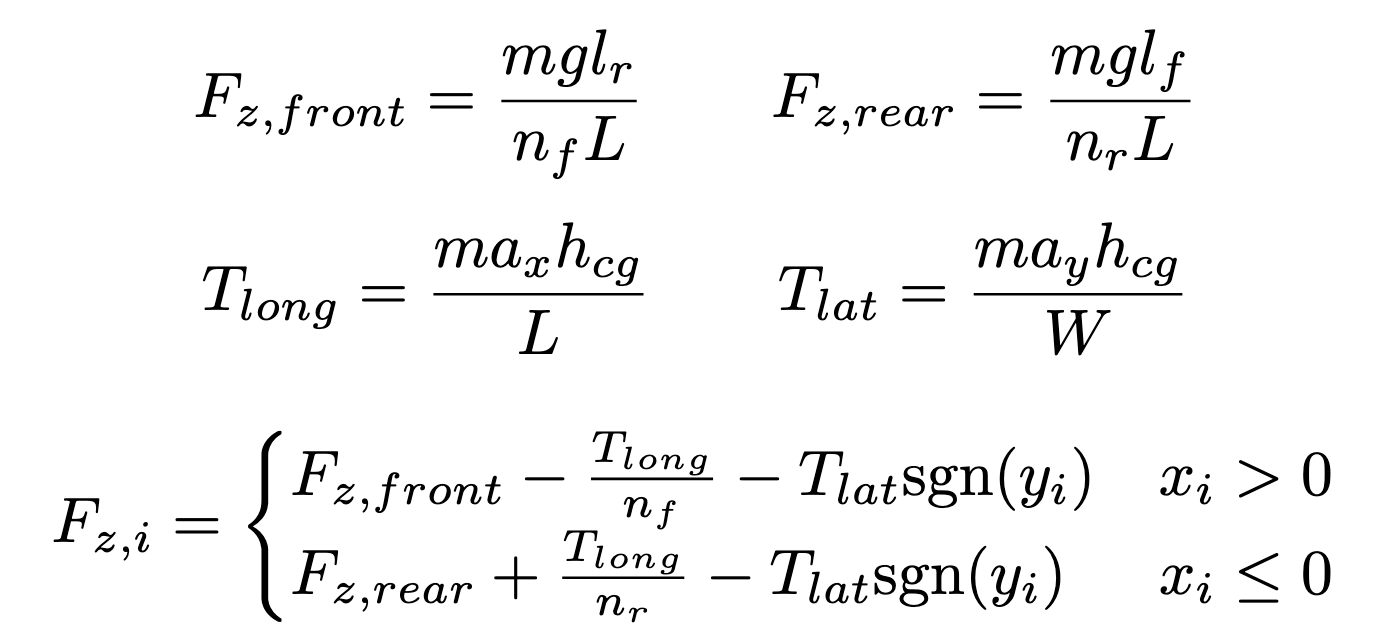
Normal load is redistributed longitudinally and laterally based on acceleration, center-of-gravity height, wheelbase, and track width. This ensures each tire-force computation uses realistic per-wheel normal forces.

Load transfer visualization

Rider Lean Dynamics

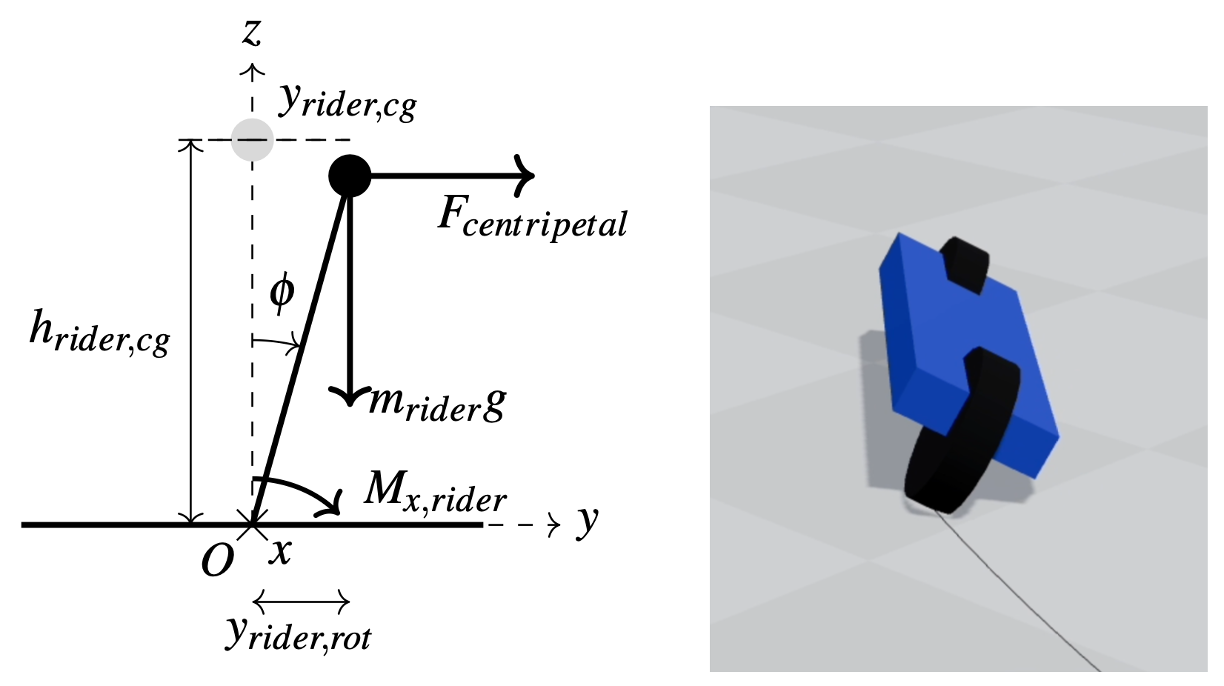
For lean-capable MMVs, we calculate the rider’s lean angle from the velocity and turn radius. This angle is used to project the rider’s gravitational force into the lateral axis and calculate the roll moment.

Rider lean visualization

Skateboard Truck Geometry

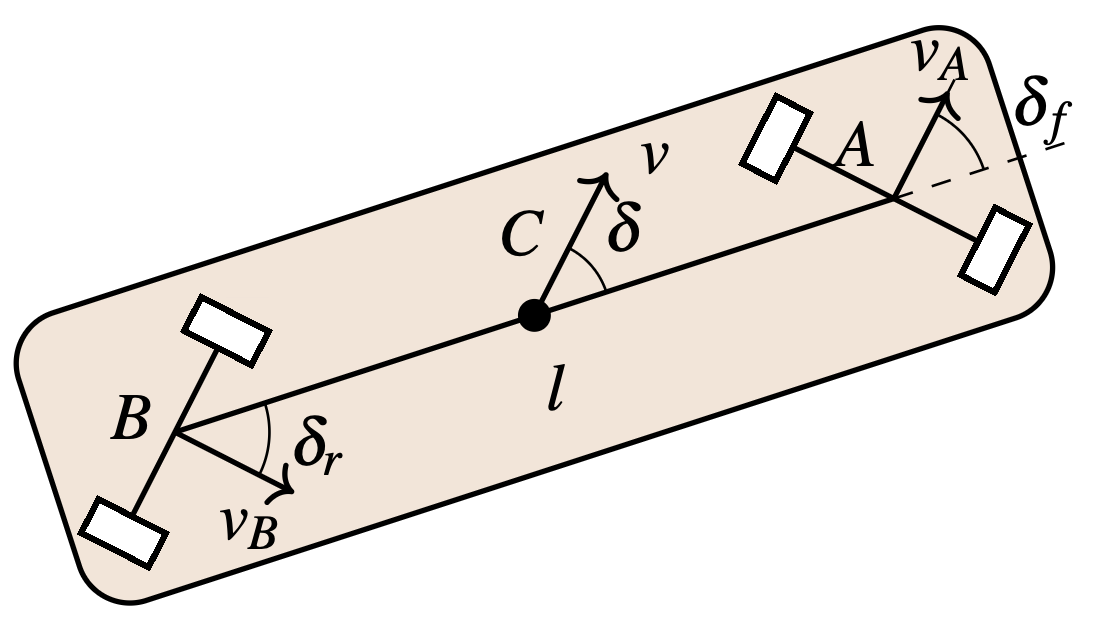
Skateboards have two independent steering assemblies called “truck” that rotate in opposite directions about a kingpin bolt when the rider leans to turn. We calculate these angles from the lean angle.

Skateboard truck geometry visualization
GM3 update pipeline

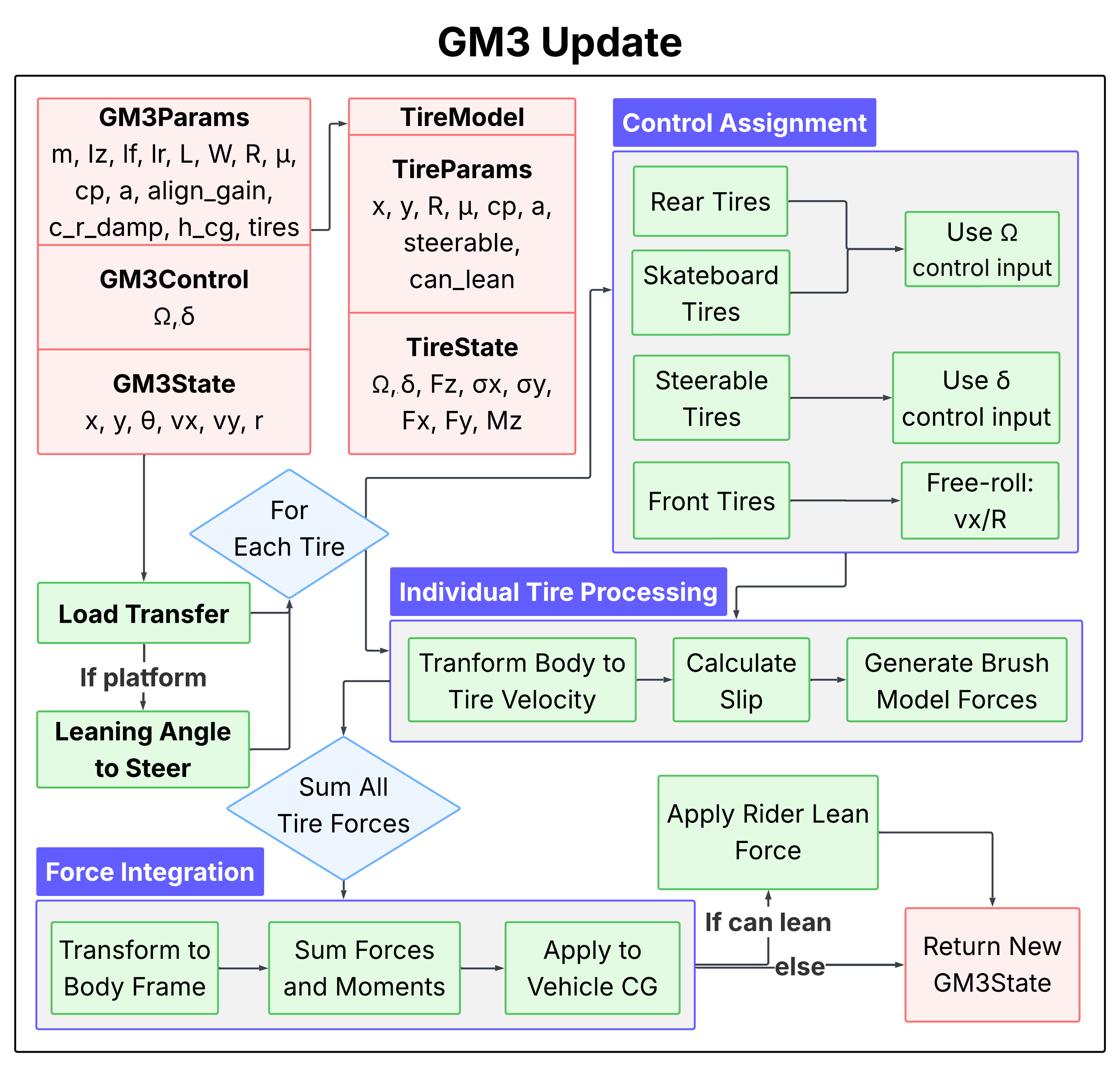
The GM3 State gets updated with the following steps: (1) load transfer and leaning angle to steer conversion for platforms, (2) control assignment for each tire, (3) individual tire processing with the brush model, and (4) force integration and rider lean force application.

Generalization Across Platform Layouts

Currently, our model supports three control interfaces: explicit manual control, lean-to-steer with truck geometry, and differential drive. Since GM3 is modular, the control module can be extended to other control interfaces. This allows GM3 to support any wheeled MMV or robot, given individual wheel steering angles and angular velocity from the control module.

Common

Bicycle two-wheel layout

Bicycle / Scooter

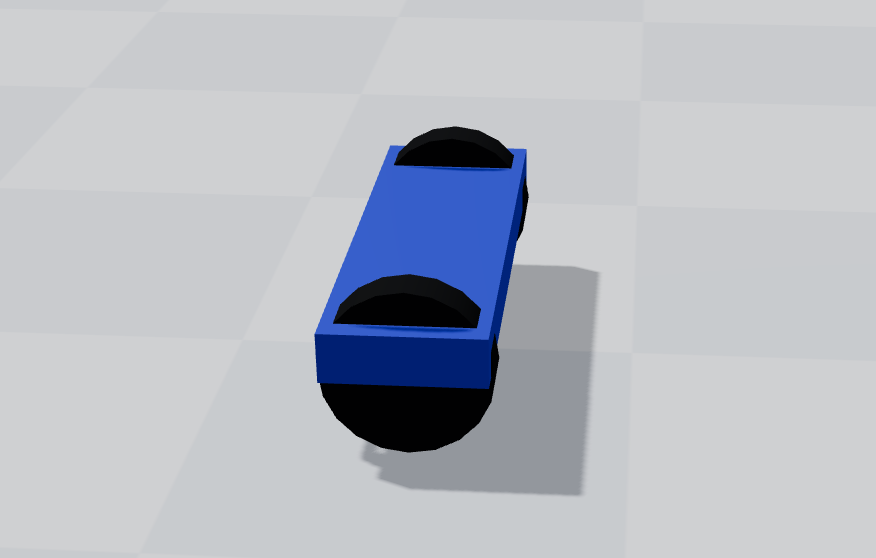
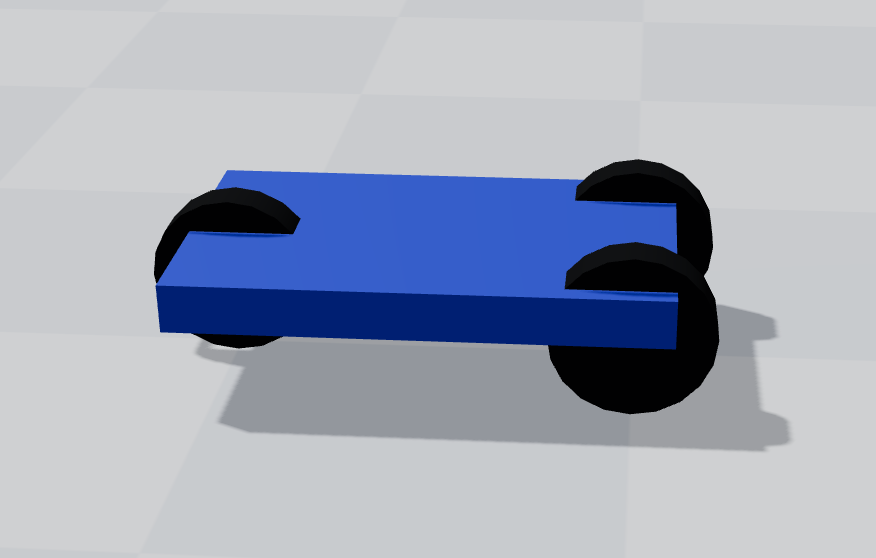
Skateboard layout

Skateboard

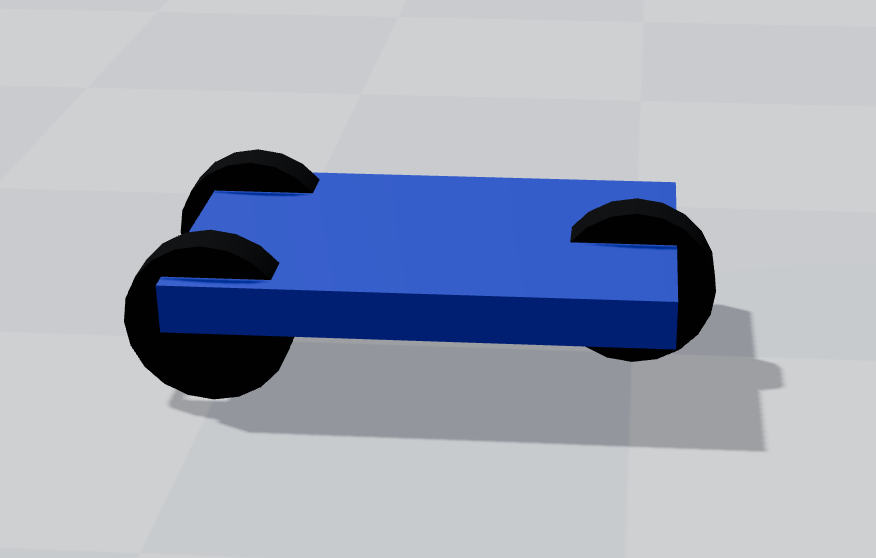
Cart or LSV layout

Cart / LSV

Uncommon

Unicycle layout

Unicycle

Hoverboard layout

Hoverboard

Delta three-wheel layout

Delta Tricycle

Tadpole three-wheel layout

Tadpole Tricycle

Novel

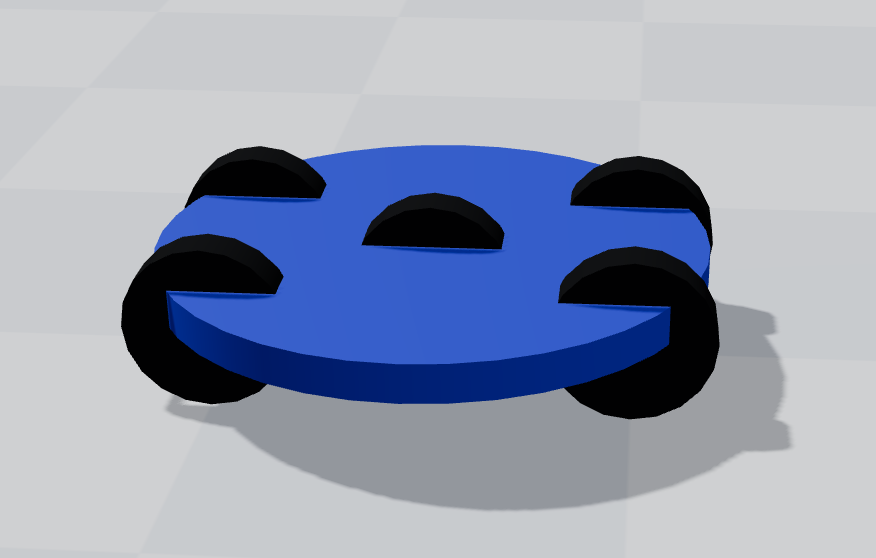
Circular platform five-wheel layout

Circular Platform (5w)

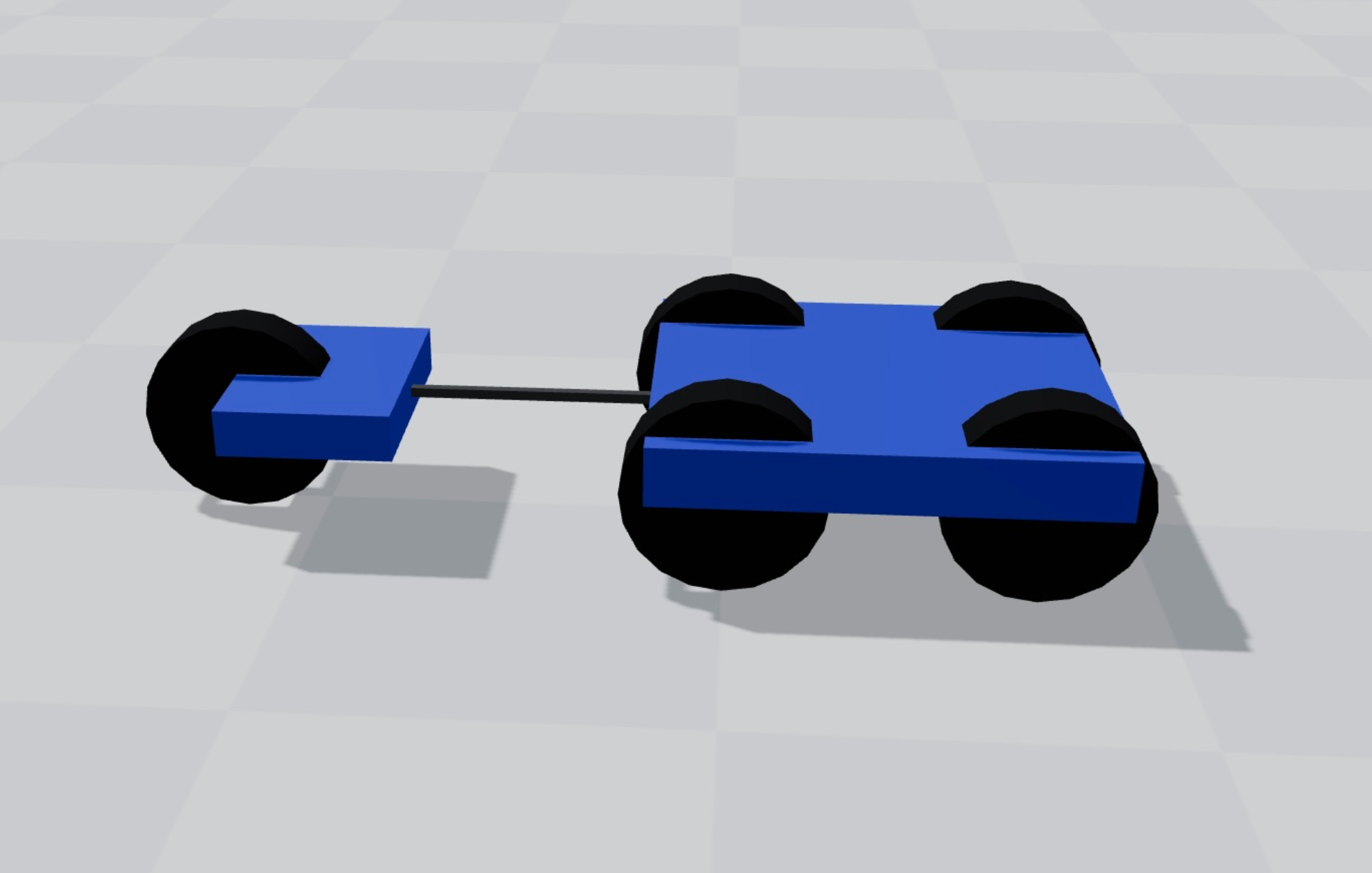
Drawn carriage layout

Drawn Carriage

Interactive Evaluation Framework

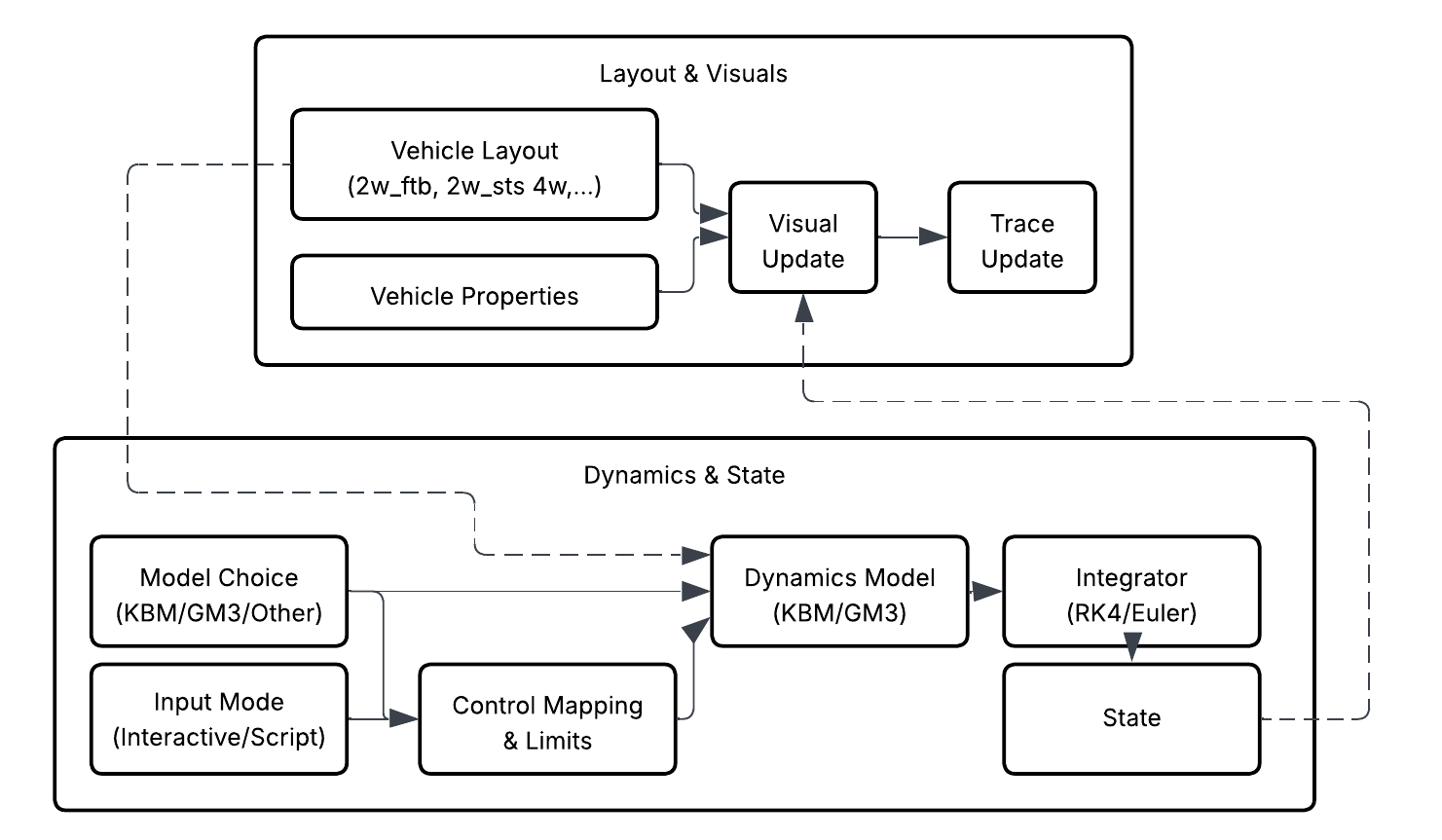
Simulation framework diagram

Model-agnostic runtime loop with fixed-step RK4 integration, interactive/scripted control input, visual trajectory tracing, and CSV export.

The framework separates dynamics from rendering and control interfaces. This allows the same platform geometry to be tested with GM3, KBM, and future models under equivalent integration and input constraints. Supported control modes include direct steering, lean-to-steer mappings, and differential-drive behavior.

Experiments and Results

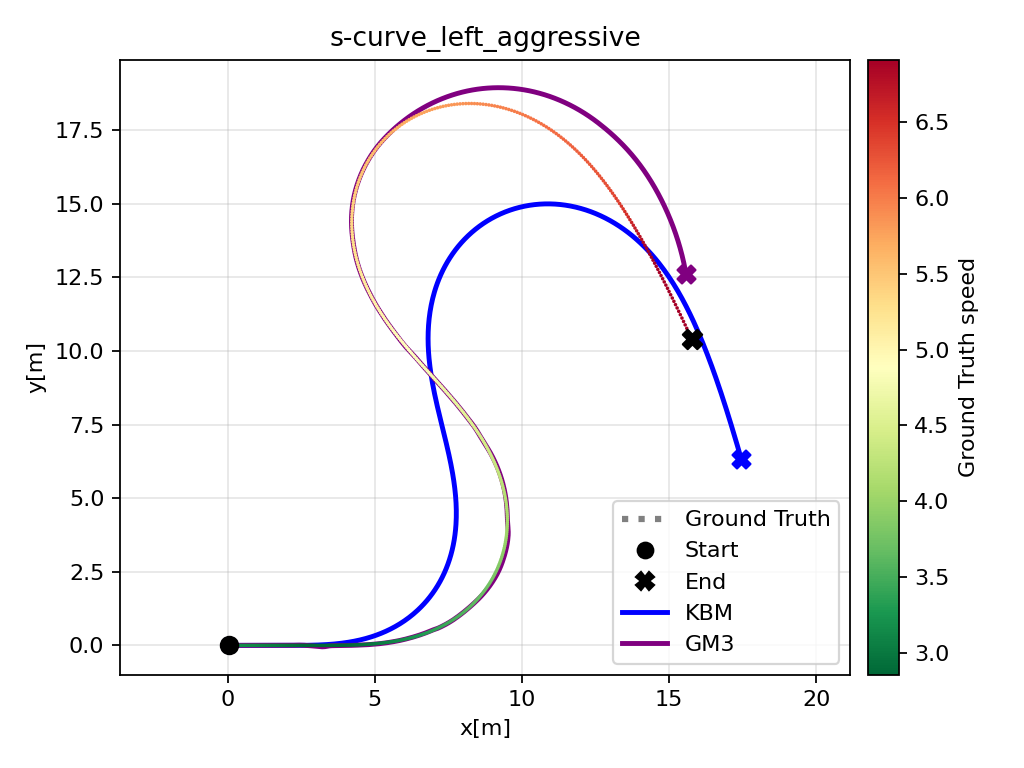
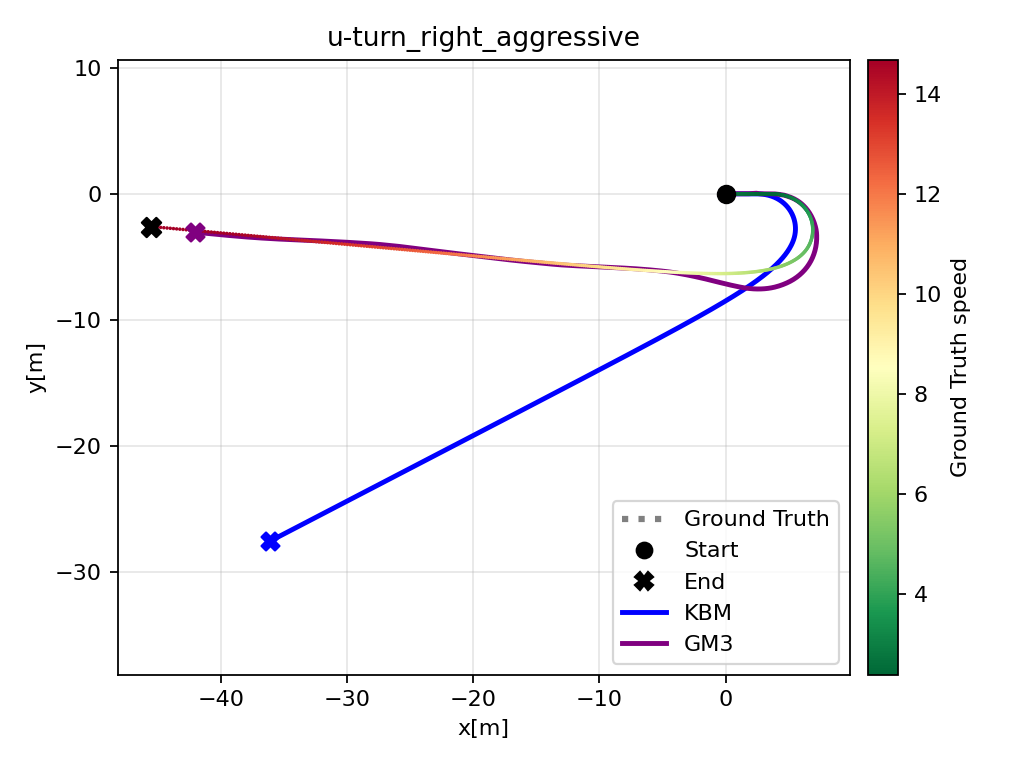
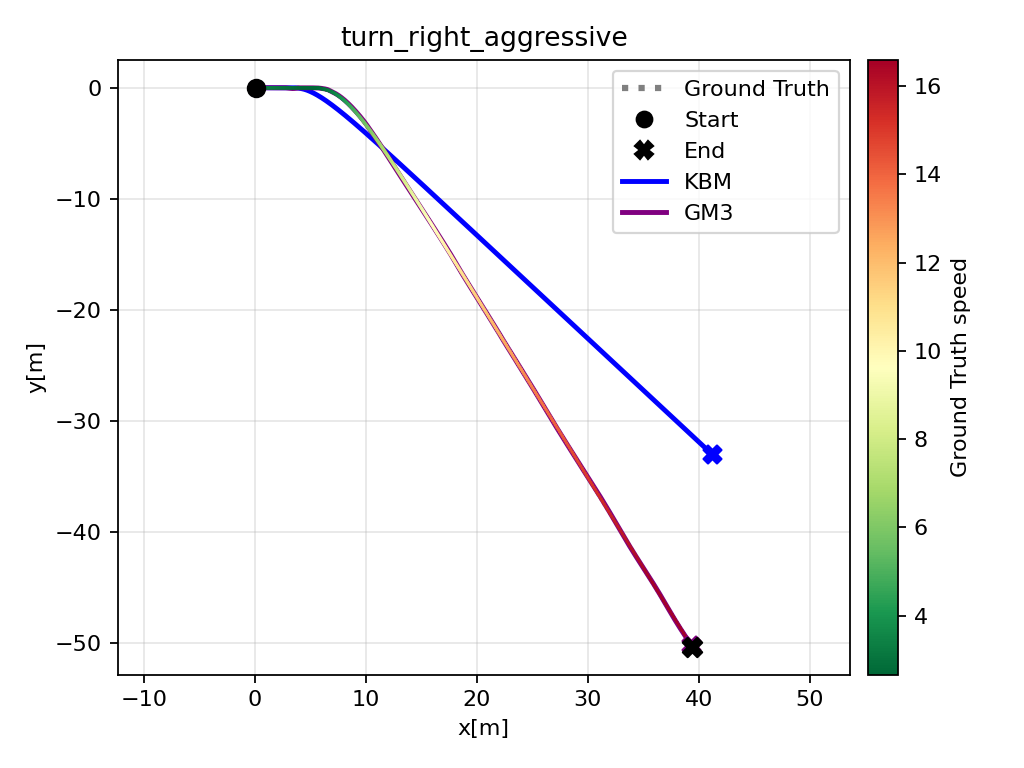
We evaluate GM3 against the Kinematic Bicycle Model (KBM). For real-world evaluation, we use trajectories from the Stanford Drone Dataset (SDD) deathCircle (roundabout) scene for three MMV modes (Biker, Skater, and Cart). To stress test GM3, we generate aggressive maneuvers, including S-curves and U-turns. We measure performance with Average Displacement Error (ADE) and Discrete Fréchet Distance (DFD).

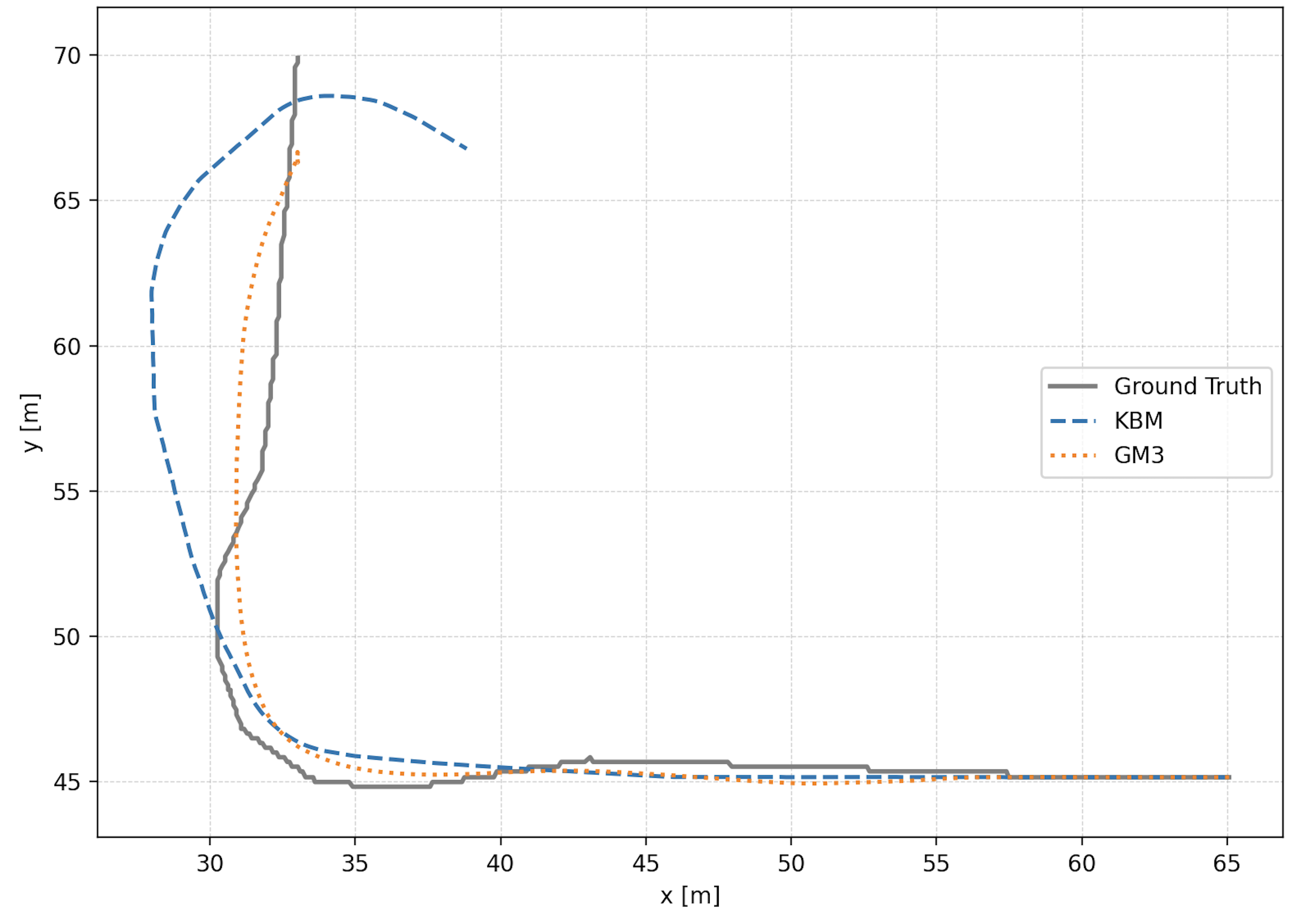
Across the SDD trajectories, GM3 reduces ADE relative to KBM for all three modes. For DFD, GM3 improves over KBM on Skater and Cart, but performs worse on Biker due to lean-induced lateral biases. On the aggressive maneuver experiments, GM3 closely follows the ground truth while KBM tends to over/under steer in high-curvature segments.

S-curve trajectory comparison

S-Curve Comparison

U-turn trajectory comparison

U-Turn Comparison

Right-turn trajectory comparison

Right-Turn Comparison

Trajectory overlay on Stanford Drone Dataset track

Biker trajectory overlay from deathCircle scene: GM3 better follows high-curvature segments compared to KBM.

Conclusion

GM3 introduces a general and physically grounded MMV model that unifies tire-level dynamics across varied platform layouts while preserving practical simulation performance. Compared with KBM baselines, GM3 delivers more realistic local trajectory behavior and competitive path-level reconstruction.

Future directions include differentiable formulations for learning and control, larger instrumented datasets for parameter identification, and tighter integration into multi-agent autonomous-system simulation pipelines.

Acknowledgements

This work is supported in part by Dr. Barry Mersky and Capital One E-Innovate Endowed Professorships, University of Maryland Distinguished University Professorship, Maryland Transportation Institute Fellowship, National Science Foundation, and ARL-UMD ArtIAMAS Cooperative Agreement.